Outdoor Patio Decor -DIY Up-cycle projects. Sustainable outdoor patio home decor projects
Outdoor Patio Decor decor makeover guide, with up-cycle , DIY guide on budget and eco-friendly home decor ideas. Vertical garden, Up-cycle tyres as planters.
6 min read
DIY Up-cycle Ideas to transform your Patio.
10 Budget-Friendly & DIY Up-cycle Ideas for the Conscious Sustainable Shopper.
Do you look at your patio and see a "work in progress," but your budget says "maybe next year"?. Transforming your outdoor space doesn’t require a massive carbon footprint or a massive bank account. By embracing the art of Up-cycling, you can create a high-vibe, sustainable sanctuary using what you already have (or what someone else was about to toss).
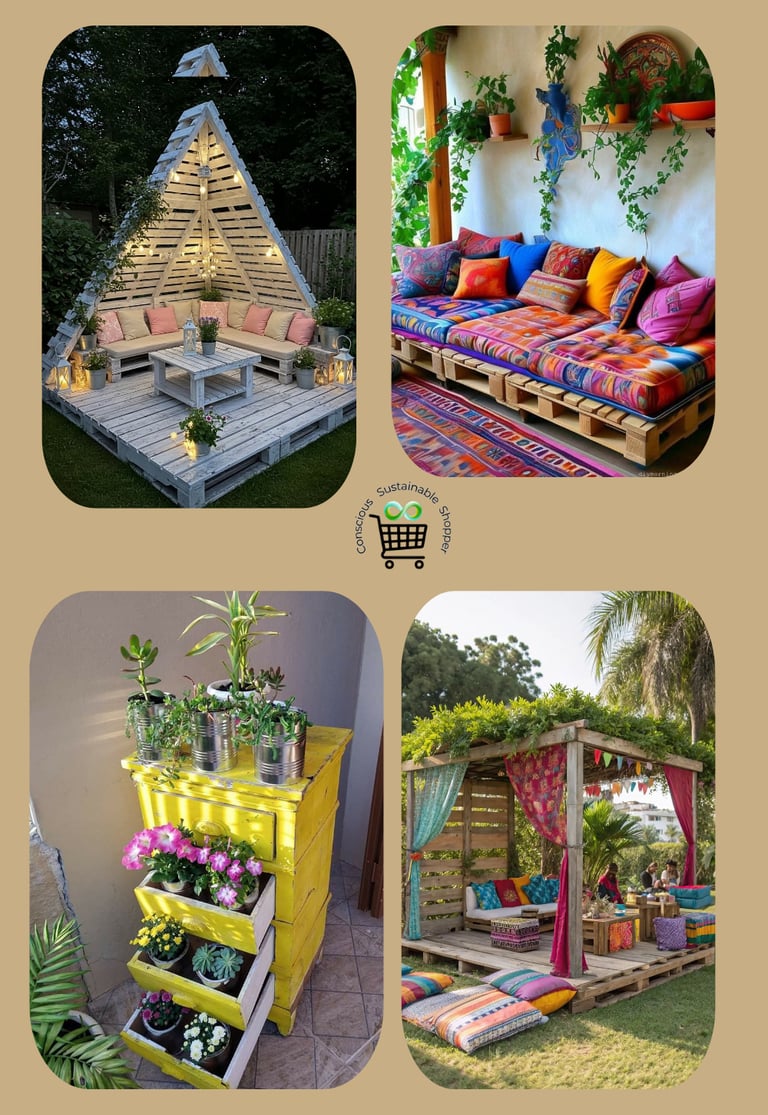
1.Pallet Lounge: From Shipping Waste to Chic Seating
Wooden pallets are the "holy grail" of sustainable DIY up-cycle project. Most local businesses are happy to give them away for free.
DIY Up-cycle project : Stack two pallets for height, sand them down, and finish with a non-toxic, eco-friendly wood stain.
Sustainable Sourcing : Instead of buying polyester cushions, look for recycled cotton or hemp floor pillows.
2. Tin Can Lanterns: Moody Lighting for Zero Cost
Don’t recycle those soup cans just yet. They make the most beautiful, "boho-chic" lanterns.
DIY Up-cycle project : Clean the cans, fill them with water, and freeze them (this prevents denting). Use a hammer and nail to punch patterns into the sides. Once the ice melts, add a soy-wax tea-light.
Sustainable Sourcing : Use solar-powered LED pucks instead of wax candles for a "set it and forget it" green energy solution.
3. Vertical Herb Garden (Up-cycled Ladder)
If you have a small patio, go vertical. An old wooden ladder is the perfect frame for a "living wall."
DIY: Lean an old ladder against the wall. Attach mismatched terracotta pots (check thrift stores!) using heavy-duty hemp twine.
Conscious Touch: Plant native pollinators or kitchen herbs like mint and rosemary to support your local ecosystem.
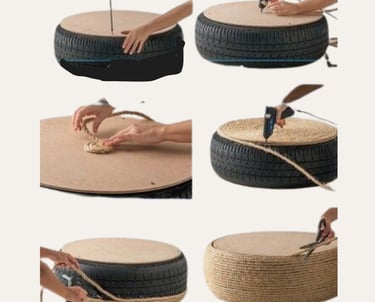
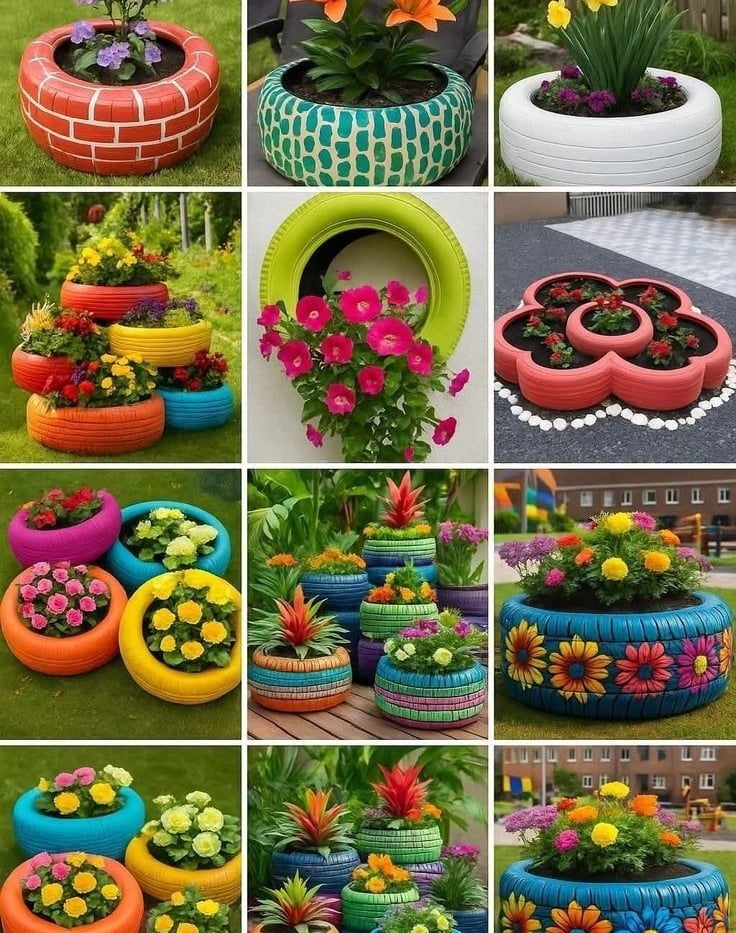
4. Tire Ottoman: Trash to Treasure
Old tires are a major environmental hazard in landfills, but they make incredibly durable outdoor ottomans.
5. Up-cycle old dupattas, stoles or shawls, worn sarees
DIY : Up-cycle unused old dupattas, bedsheets that are slightly faded, old sarees that have beautiful motifs and prints , to make canopies around outdoor seating areas to give a regale feel of Arabian nights.
Conscious Touch : Canvas or jute or bamboo blinds alternatively to cover the outdoor areas to create shade during hotter seasons.
6. Old Wine bottles into new lanterns.
DIY : Don’t discard those dark green and amber coloured wine bottles, clean them , carefully remove those labels, to create a colour hued effect.
Conscious touch : Use fairy lights from last Diwali or Christmas to cluster them into these bottles, to create subtle lighting experience for a sit down outdoor dinner.
7. Old Cushions or pillows
DIY : Old Cushions or pillows aren’t easy to dispose away, but you can give them a second up-cycle life with using old dupattas , old sarees or even old jeans to create a mosaic of cushion covers to breathe new life , use them as floor cushions on the patio.
Conscious touch : Up-cycle old cushions or pillows.
8.Broken Tea cups or bowls
DIY : Use broken tea cups without handles or old bowls as planters to grow small succulents or indoor climbers which require water rather than soil
Conscious touch : Indoor plants add green soothing corner without pinching your pocket.Creating an inviting Atmosphere
Introducing greenery through potted plants or trailing vines can also infuse your gazebo with a breath of fresh air, connecting the structure seamlessly to the outdoor environment. Choose low-maintenance, hardy plants that thrive in your region's climate for the best results. Eucalyptus, ferns, or cascading ivy can enhance the rustic allure, making your gazebo feel like a true sanctuary.
Transforming your patio is about more than just aesthetics; it’s about proving that a Conscious Sustainable Shopper doesn't need to sacrifice style for ethics.
Ready to start your green transformation? Check out our [Curated Guide to Style your balcony without compromising comfort and Budget Friendly Eco-Friendly Outdoor Essentials] for the best ethical tools to get the job done!

Frequently Asked Questions
What does Conscious Sustainable Shopper all about?
Conscious Sustainable Shopper is a affiliate based curated shopping guide for home décor and lifestyle, featuring 🌿 environmentally conscious and ♻️ ethically sourced products, and 🐾 Pet-safe , that features, 🧵artisanal products and locally manufactured. Some links on this website directly, leads to affiliated brand partners, who own and sell the products. Hence all purchases, payments, order fulfilments, deliveries, and returns are managed directly by the respective brands. We do not handle order fulfilments or returns.
As an affiliate partner website, we earn small portion of commission on every successful purchase you make at no extra cost to you, via the link or any "coupon code" that may be published for certain products, which may be applicable for limited duration. Kindly read the validity duration for any "coupon code" for any product listed on our website, before any purchase.
Does affiliate income influence our recommendations?
No. Products are selected based on environmentally friendly, and sustainably sourced, artisanal design and products and preferably manufactured locally. As a curated shopping guide our endeavour is to never compromise on our core mission of sourcing products, that are not just, good for you, your home and your pets , but above all protect and restore mother Earth.
How do we choose, which brands and products to feature ?
We evaluate sourcing, 🔍 verified materials, certifications , ethical practices, durability and brand transparency before listing any product.
How do we choose, which brands and products to feature ?
We evaluate sourcing, 🔍 verified materials, certifications , ethical practices, durability and brand transparency before listing any product.
Are all products certified sustainable ?
No. all sustainable products carry certifications. We also assess brands using clear disclosures. responsible practices and credible sustainability commitments
Do we personally test the products listed ?
Some products are reviewed through accredited certifications and labels, and are carefully researched using brand transparency , certifications, customers feedback and expert sources
Do we feature international brands ?
Yes. We showcase both global and local brands that align with sustainable and ethical practices
📩 Community & Contact
Can brands collaborate or get listed on your website?
Yes. Ethical and sustainable brands can reach out through our contact page for collaboration or listing opportunities.
How can I stay updated with new products and guides?
You can subscribe to our newsletter or follow us on social media for updates on environmentally friendly, sustainable home -décor , well-being trends, and pet-friendly homes.
What is up-cycled home décor?
Up-cycled home décor refers to products created by transforming discarded or unused materials into new, functional, or decorative itemwithout breaking them down into raw materials. It adds value while reducing waste
♻️ Upcycled & DIY Home Décor
How does up-cycling extend a product’s lifespan?
Up-cycling gives materials a second life by repurposing them instead of discarding them. By extending the lifespan of wood, metal, textiles, or furniture, upcycling reduces the need for new raw materials and delays items from ending up in landfills.
How does extending a product’s lifespan help the environment?
When products are used beyond their original lifespan:
Less waste goes to landfills
Fewer new materials need to be extracted
Energy consumption from manufacturing decreases
Carbon emissions linked to production and disposal are reduced
Extending use is one of the most effective and accessible ways to lower environmental impact at home.
How is up-cycling different from re-cycling?
Re-cycling breaks materials down to create new raw materials, often requiring industrial processing and energy. Up-cycling preserves the original material in its existing form, using less energy while maintaining its value and character.
Are up-cycled products durable?
Yes. Many upcycled pieces are made from reclaimed solid wood, metal, or textiles that were originally built to last. When restored or reimagined thoughtfully, they can be just as durable if not more than newly manufactured items.
Are DIY upcycled décor projects truly sustainable?
They can be, especially when using reclaimed materials, non-toxic finishes, and existing tools. Thoughtful design that extends usability and avoids unnecessary consumption makes DIY projects more environmentally responsible extending a product’s lifespan help the environment?
When products are used beyond their original lifespan:
Less waste goes to landfills
Fewer new materials need to be extracted
Energy consumption from manufacturing decreases
Carbon emissions linked to production and disposal are reduced
Extending use is one of the most effective and accessible ways to lower environmental impact at home.
Does up-cycling contribute to circular living?
Yes. Up-cycling supports a circular approach to design by keeping materials in use for longer, reducing demand for new production, and minimizing waste. It shifts focus from disposal to regenerate.
Can up-cycled décor work in modern homes?
Absolutely. Up-cycled design is not limited to rustic styles. With thoughtful finishing and craftsmanship, it can complement modern, minimalist, industrial, or contemporary interiors.
Is up-cycled décor safe for homes with pets?
It can be, provided non-toxic adhesives, paints, and finishes are used. Smooth edges and sturdy construction are important in pet-friendly homes.
Why is upcycling considered one of the simplest sustainable choices?
Because it focuses on using what already exists. Extending the life of materials requires fewer resources than producing something new, making it one of the most practical and impactful sustainability actions at a household level.
Subscribe to our newsletter
Enjoy exclusive special deals available only to our subscribers.